一、认识数据模型对象(DMO)
Customer 360 数据模型是 Data 360 的标准数据模型,理解 DMO(数据模型对象)、主题领域、常用 DMO 及其在 Party 与 Engagement 中的应用,是整个 Data 360 之旅的起点。
学习目标
完成本单元后,你将能够:
- 解释标准化 Customer 360 数据模型的目的
- 定义并识别常见的数据模型对象(DMO)
- 将更广泛的数据模型概念与你的具体实施关联起来
Customer 360 数据模型——让数据互操作的标准化蓝图
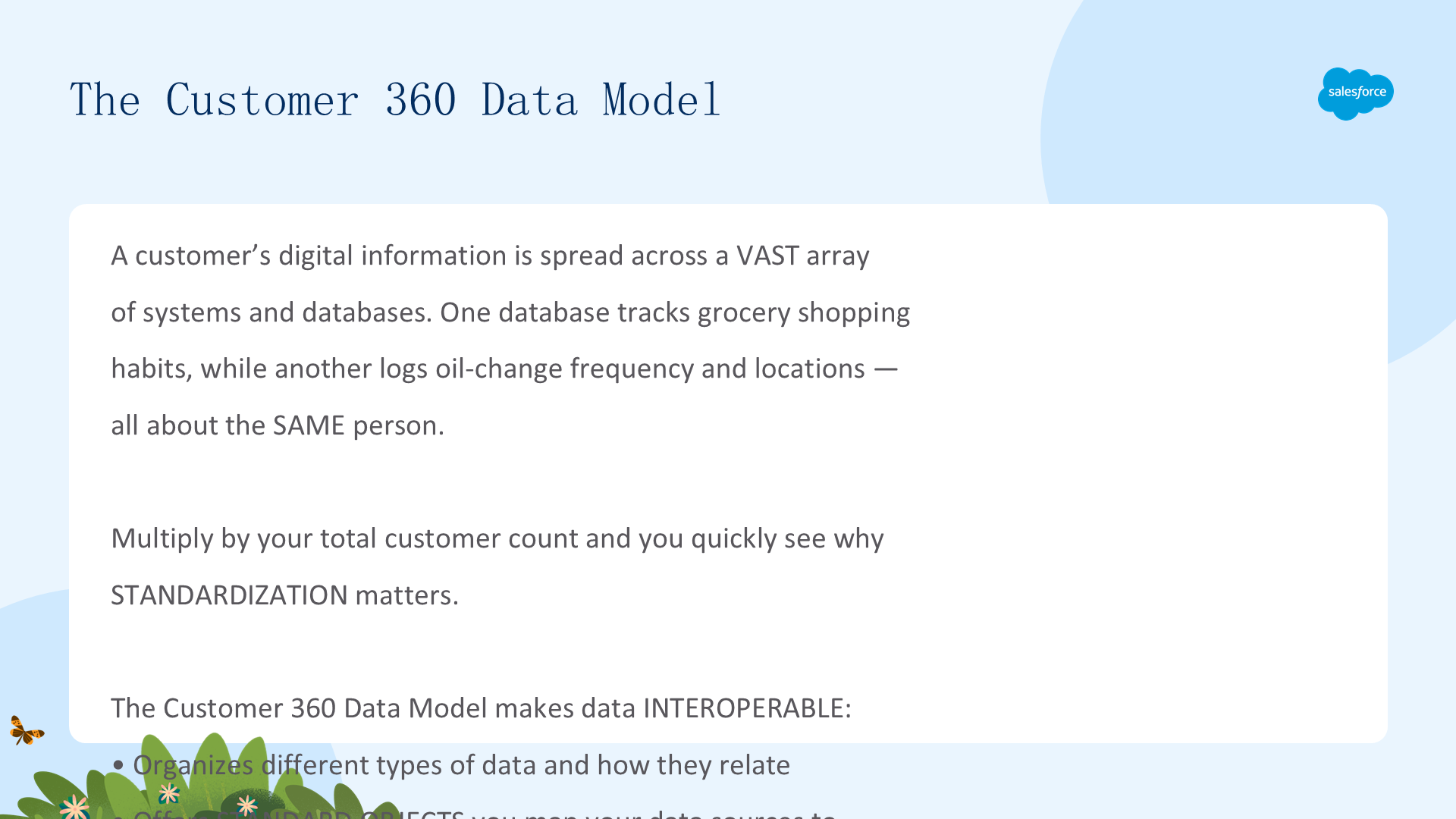
客户数字信息分散在大量系统和数据库中——同一个人的基本信息可能存在于多个地方,而特定数据只与特定活动关联。一个数据库追踪杂货购物习惯,另一个记录汽车换油频率和地点——全部围绕同一个人。
乘上你拥有的客户总数,你就能迅速明白为什么标准化如此重要。
Customer 360 数据模型是 Data 360 的标准数据模型,使数据可互操作。它:
- 组织不同类型的数据及其相互关系
- 提供标准对象供你将数据源映射到其上
- 精确描述数据模型中可以存在哪些数据,以及用哪些属性来描述这些数据
- 充当地图图例——任何阅读你数据模型的人都能准确理解每个元素的含义
数据从何而来?——认识多样化的数据源
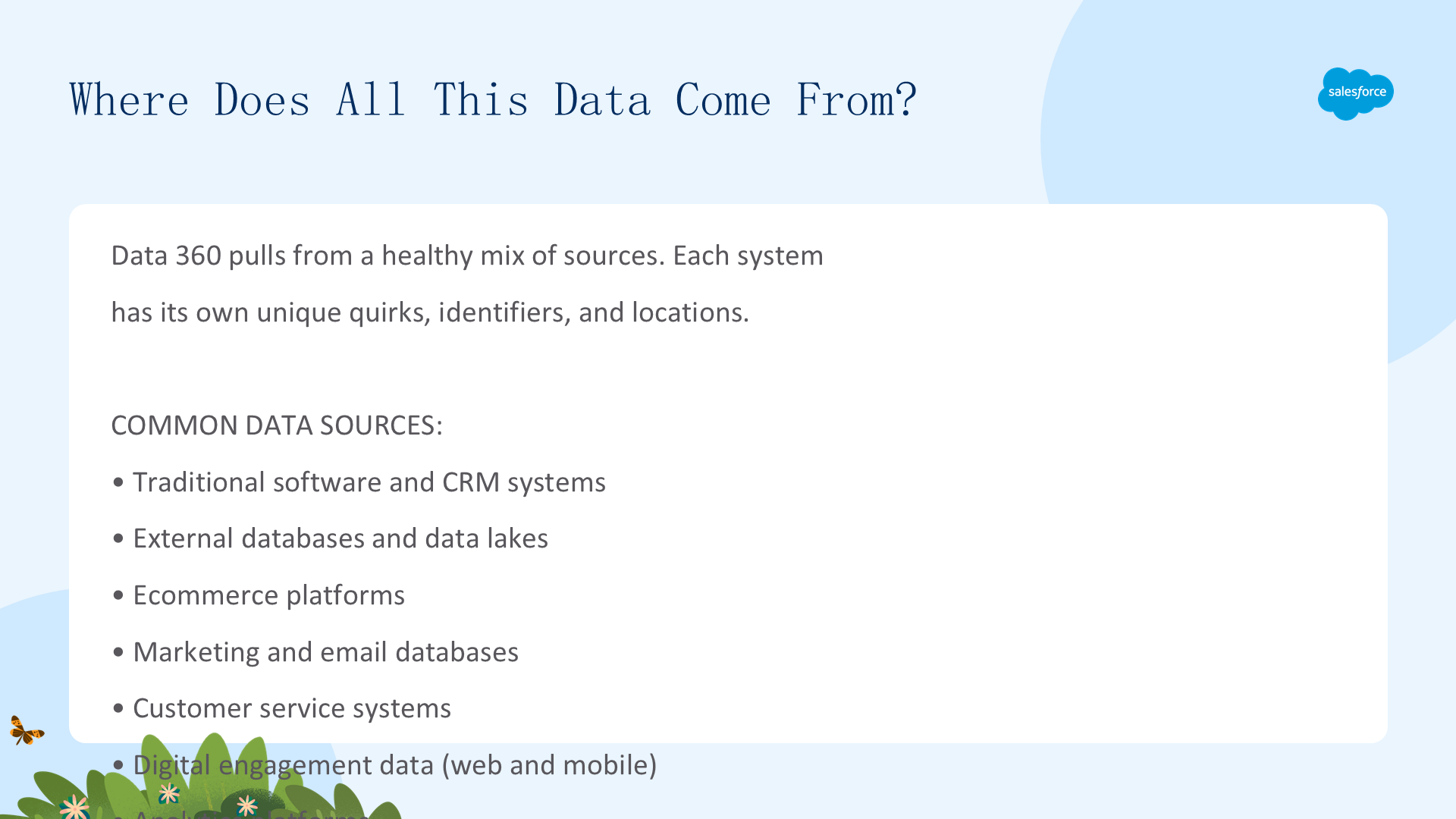
Data 360 从多种来源获取数据,每个系统都有独特的标识符和位置:
- 传统软件和 CRM 系统
- 外部数据库和数据湖
- 电商平台
- 营销和邮件数据库
- 客户服务系统
- 数字互动数据(Web 和移动端)
- 分析平台
例如 Marketing Cloud Engagement 使用 customer key 识别订阅者,其他系统使用不同的主键值。Data 360 链接所有这些 ID 并对齐信息——你不需要逐一处理每个系统的细微差异,Data 360 替你完成这项繁重工作。
数据模型对象(DMO)——数据模型的构建块
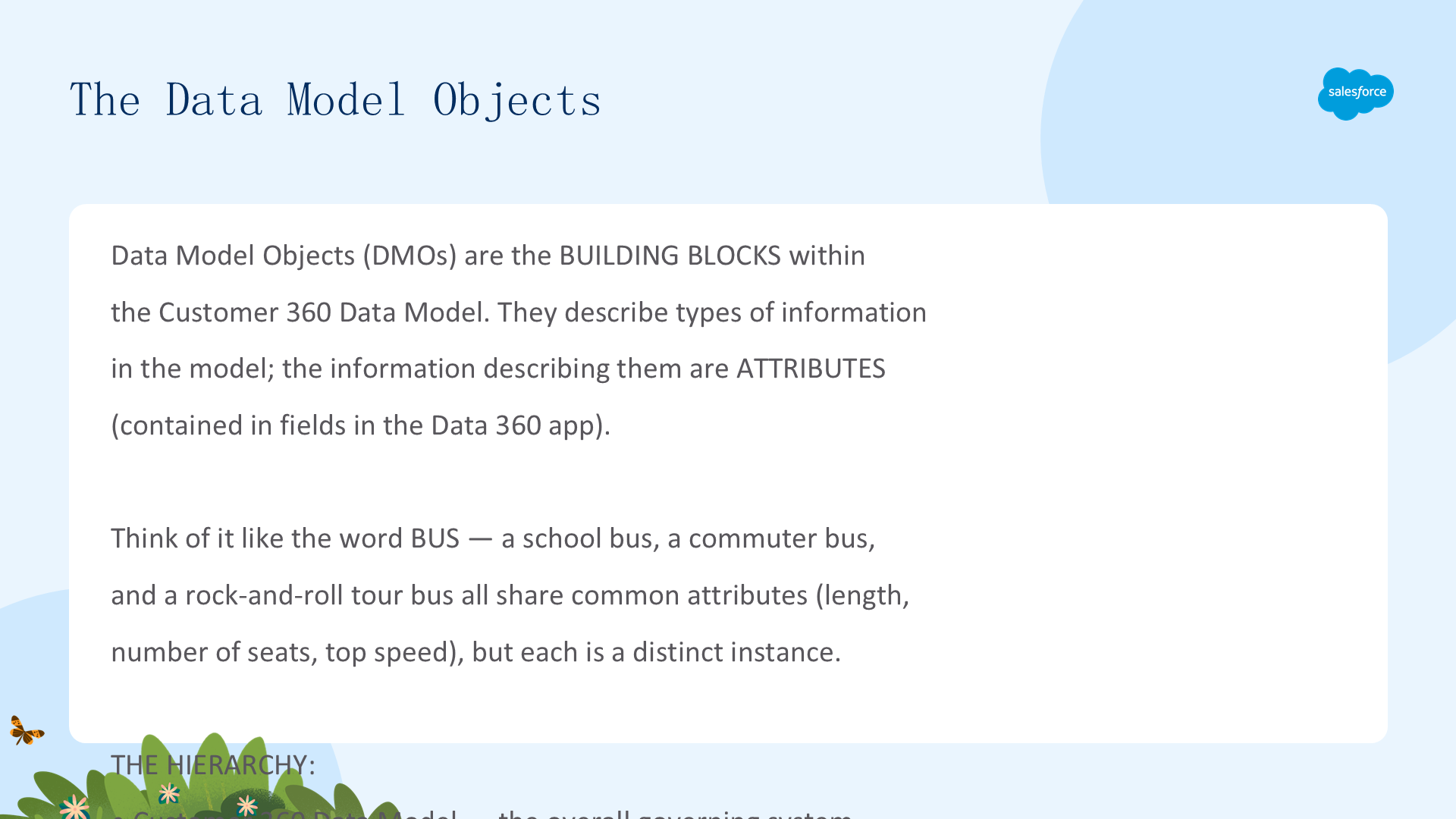
数据模型对象(DMO)是 Customer 360 数据模型中的构建块。它们描述数据模型中的信息类型,而描述 DMO 的信息被称为属性(存储在 Data 360 的字段中)。
可以想象成"巴士"这个词——校车、通勤巴士、摇滚巡演巴士各不相同,但它们共享一些通用属性(长度、座位数、最高速度)。DMO 提供了一个最优化的表示方式,让你拥有一个公认的信息框架——无论数据来自何处,都能标准化映射到正确的 DMO 和属性。
Customer 360 数据模型的层次结构:
- Customer 360 数据模型——治理一套通用 DMO 的总体系统,决定如何描述这些 DMO 以及它们之间的相互关系
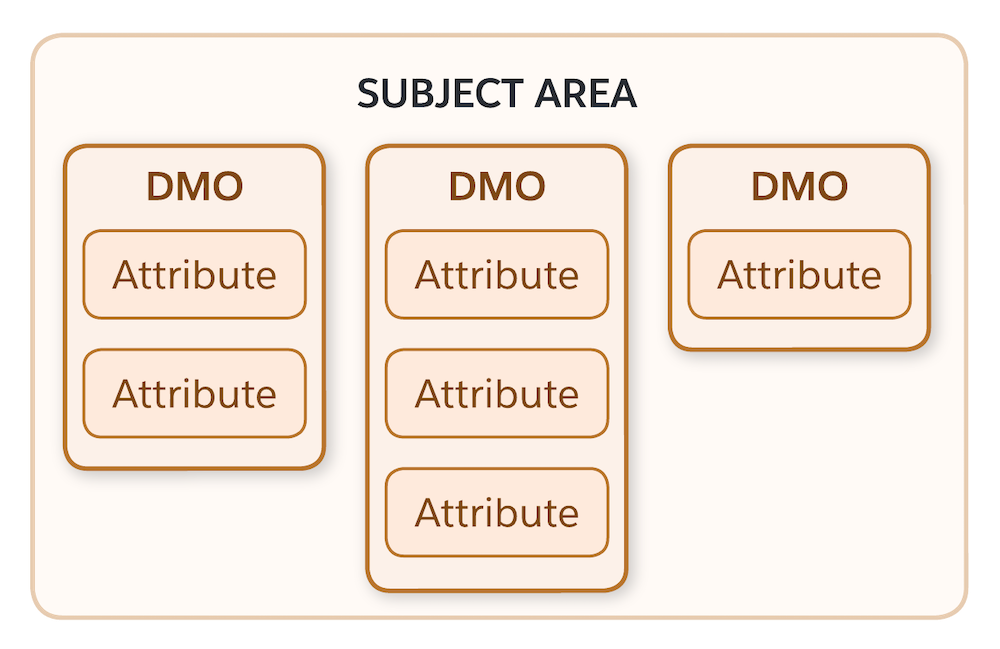
- 主题领域(Subject Area)——将大量 DMO 按照业务目标分组,如 Party(唯一标识符)、Engagement(互动数据)、Sales Orders(销售订单)、Product(产品信息)
- 数据模型对象(DMO)——描述某个事物或行动的一个实例的数据分组
- 属性(Attribute)——关于 DMO 的标准化信息片段,存储在 Data 360 的字段中
主键与外键——构建数据关系的基础
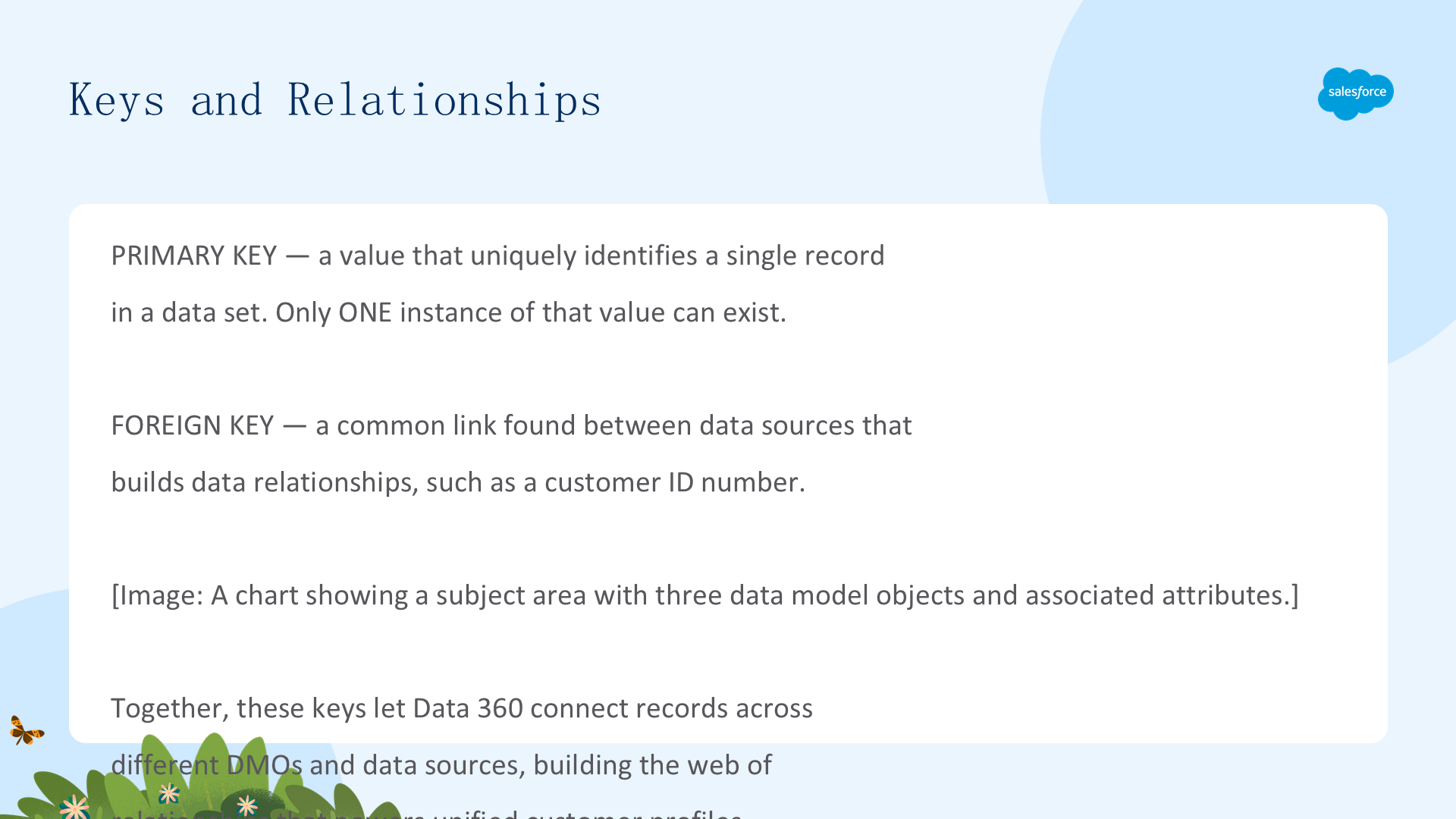
主键(Primary Key)——数据集中唯一标识单条记录的值。一个数据集中,该值只能存在一个实例。
外键(Foreign Key)——数据源之间用于构建数据关系的公共链接,如客户 ID 号。
这两个关键概念让 Data 360 能够跨不同 DMO 和数据源连接记录,构建支撑统一客户画像的关系网络。
下图展示了主题领域、DMO 和属性之间的关系:
常见 DMO——Party 与 Engagement 主题领域
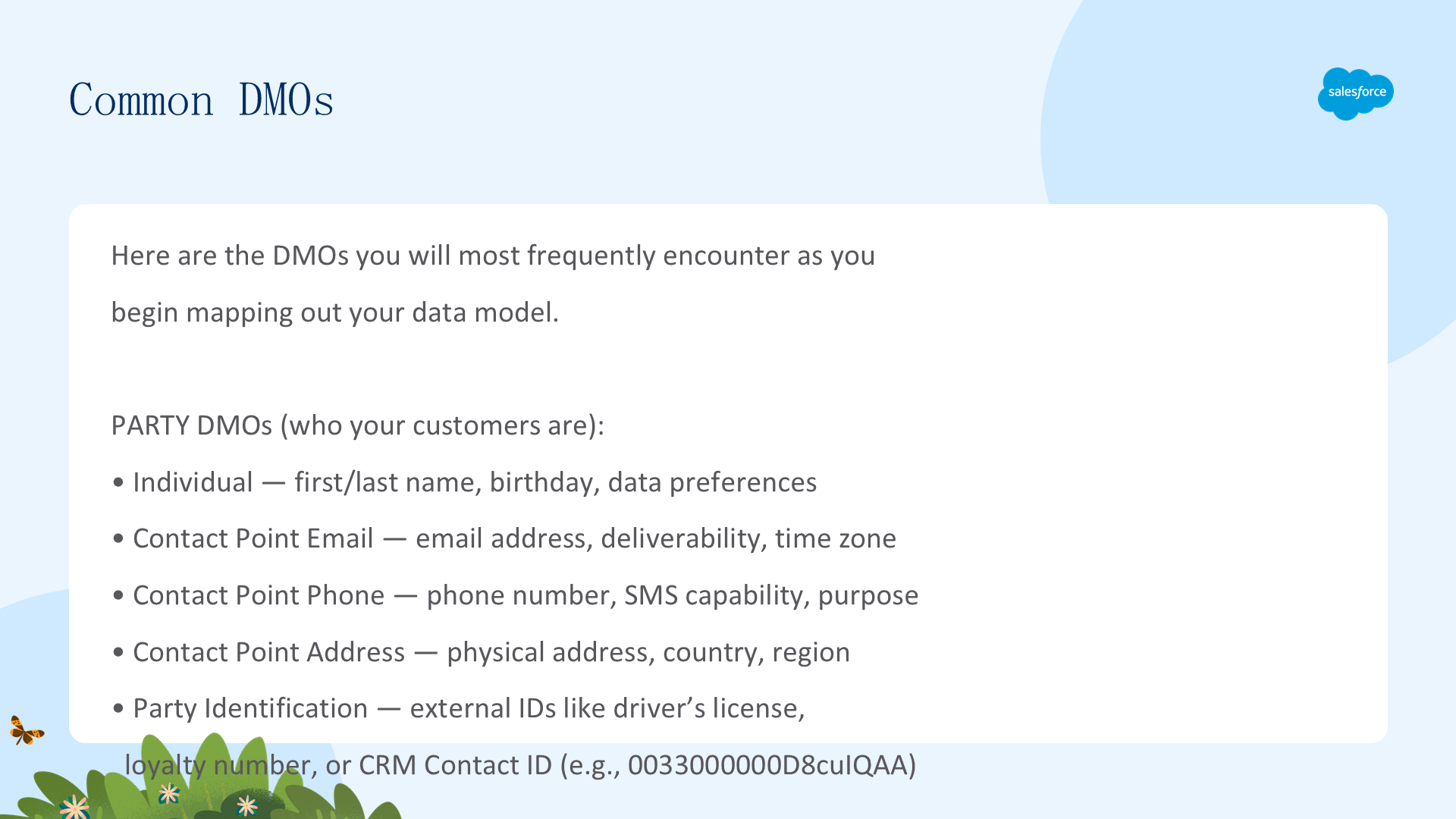
以下是最常用的 DMO 速览:
Party DMO(客户是谁):
- Individual——姓名、生日、数据与隐私偏好
- Contact Point Email——邮箱地址、可达性、时区偏好
- Contact Point Phone——电话号码、是否支持 SMS
- Contact Point Address——物理地址、国家、地区
- Party Identification——外部 ID,如驾照号、会员号、CRM Contact ID
Engagement DMO(客户做什么):
- Email Engagement——特定邮件互动的详情(打开时间、日期等)
- Sales Order——收入、购买、订单总额、配送信息
五个强制 DMO 与 Party Identification 的关键作用
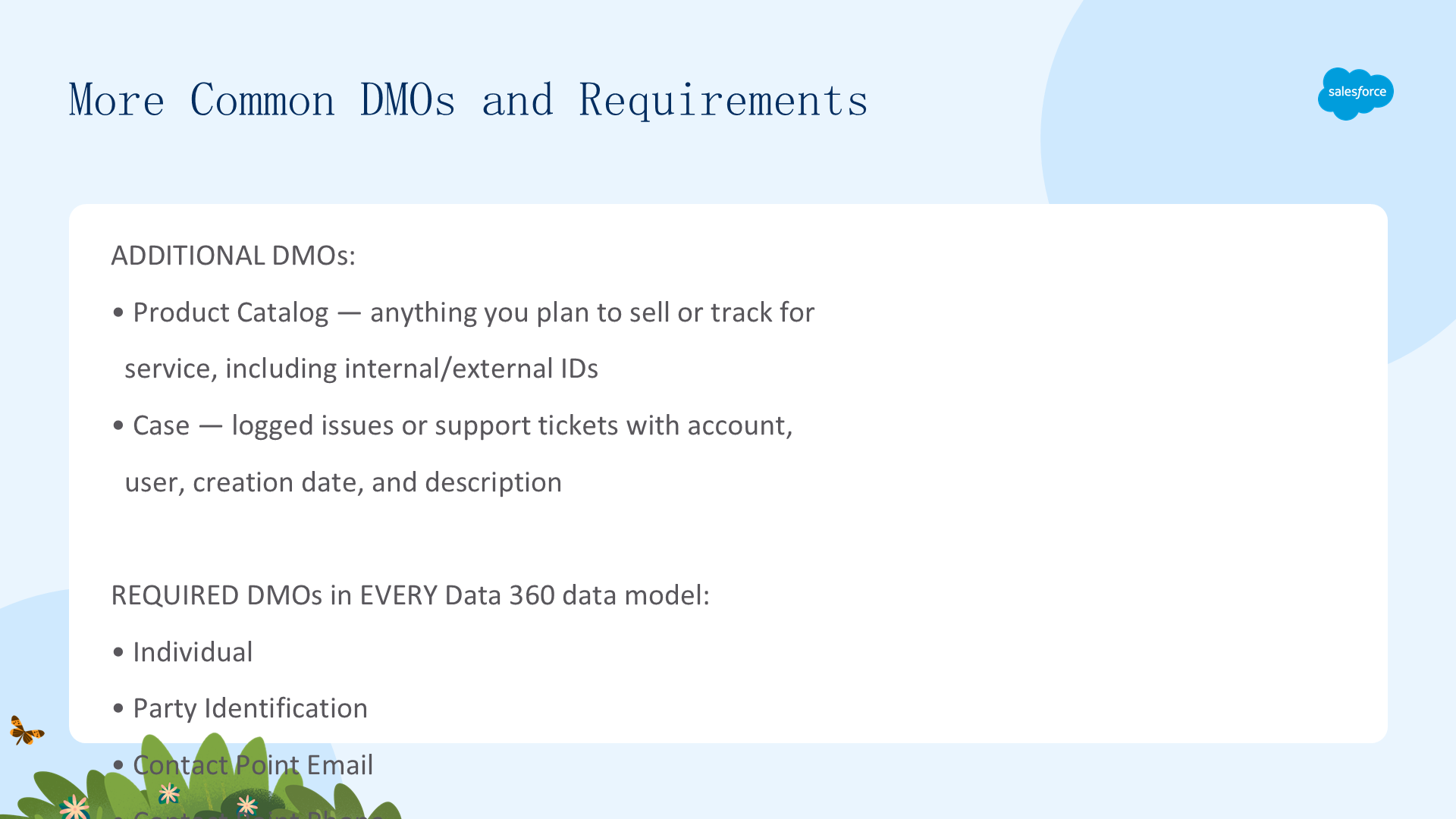
Data 360 要求每个数据模型必须包含以下五个 DMO:
- Individual
- Party Identification
- Contact Point Email
- Contact Point Phone
- Contact Point Address
其中 Party Identification DMO 扮演关键角色——它使用单一标识符(如会员奖励号或唯一通用 ID)创建代表客户的记录,帮助将来自不同源的零散数据统一整合。下一个单元将展示其工作原理。
其他常见 DMO 还包括 Product Catalog(计划销售或服务追踪的产品)和 Case(支持工单和问题记录)。
二、审视你的数据与 DMO——深入 Party 主题领域
在 Unit 02,我们跟随 NTO 企业架构师 Pia Larson 一起了解如何规划数据映射、深入 Party 主题领域、掌握 Individual DMO,并根据你的业务需求个性化数据模型。
学习目标
完成本单元后,你将能够:
- 描述 Party 主题领域的重要性
- 实施 Party 数据模型中的数据模型对象以捕获客户信息
规划数据映射——认识 NTO 企业架构师 Pia Larson
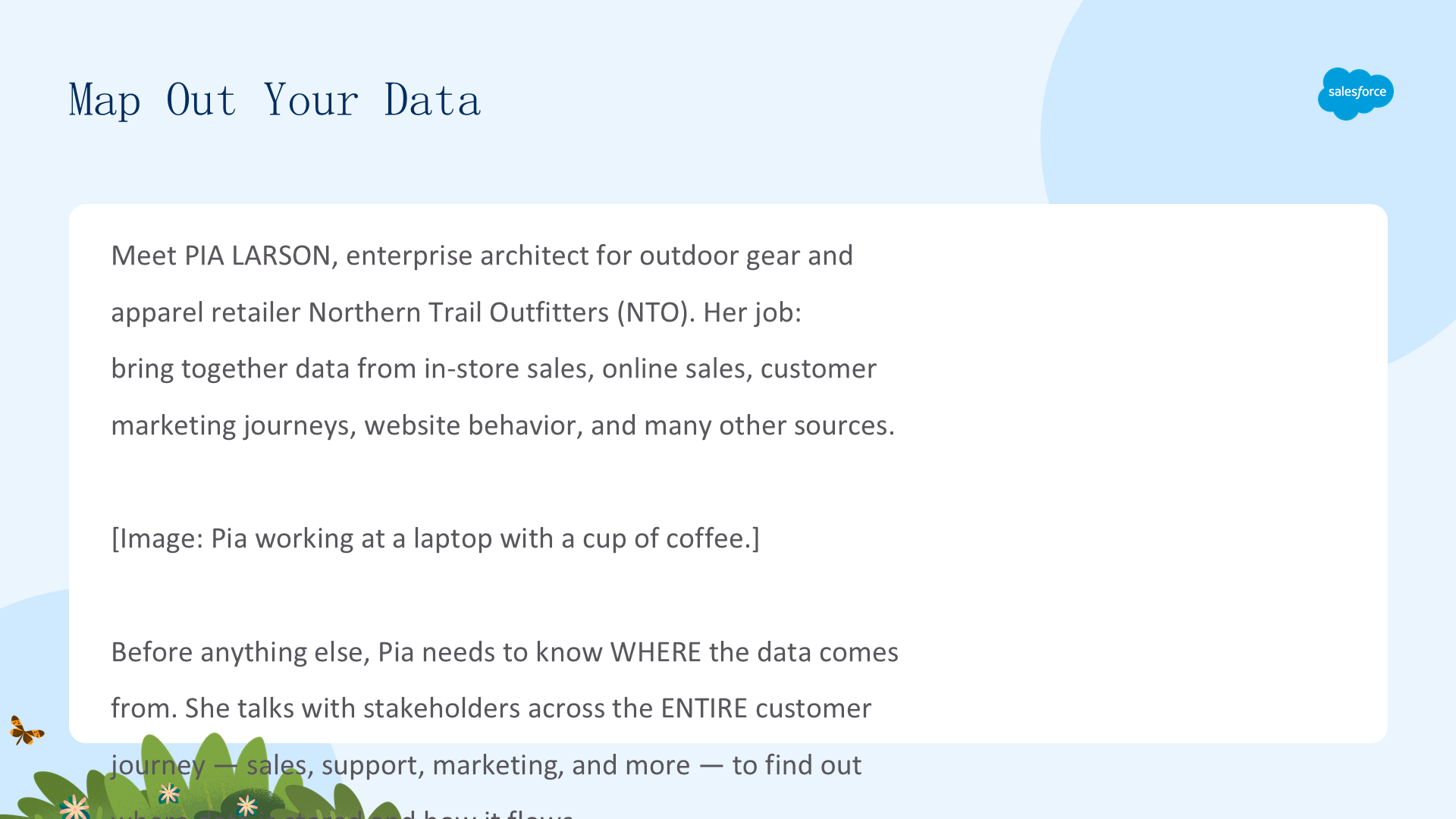
认识 Pia Larson——户外装备和服装零售商 Northern Trail Outfitters(NTO)的企业架构师。她的任务是将来自店内销售、在线销售、客户营销旅程、网站行为等多种来源的数据汇聚在一起。
在动手之前,Pia 需要先搞清楚数据从何而来——她需要跟销售、客服、营销等全链条的利益相关者沟通,找出数据存储的位置和流转方式。

Pia 的 NTO 数据模型决策
经过审查 Customer 360 数据模型,Pia 确定了 NTO 需要:
- 联系人的单一统一身份
- 这些联系人执行的行动信息
→ 这自然指向 Party 和 Engagement 两个主题领域作为数据模型的基础。
Pia 也确认了 Data 360 要求的五个强制 DMO(Individual, Party Identification, Contact Point Email/Phone/Address)都已到位。这些标准对象为构建统一客户画像奠定了坚实基础——将客户身份与其活动联系起来。
进入 Party 主题领域——个人与组织的标准化表示
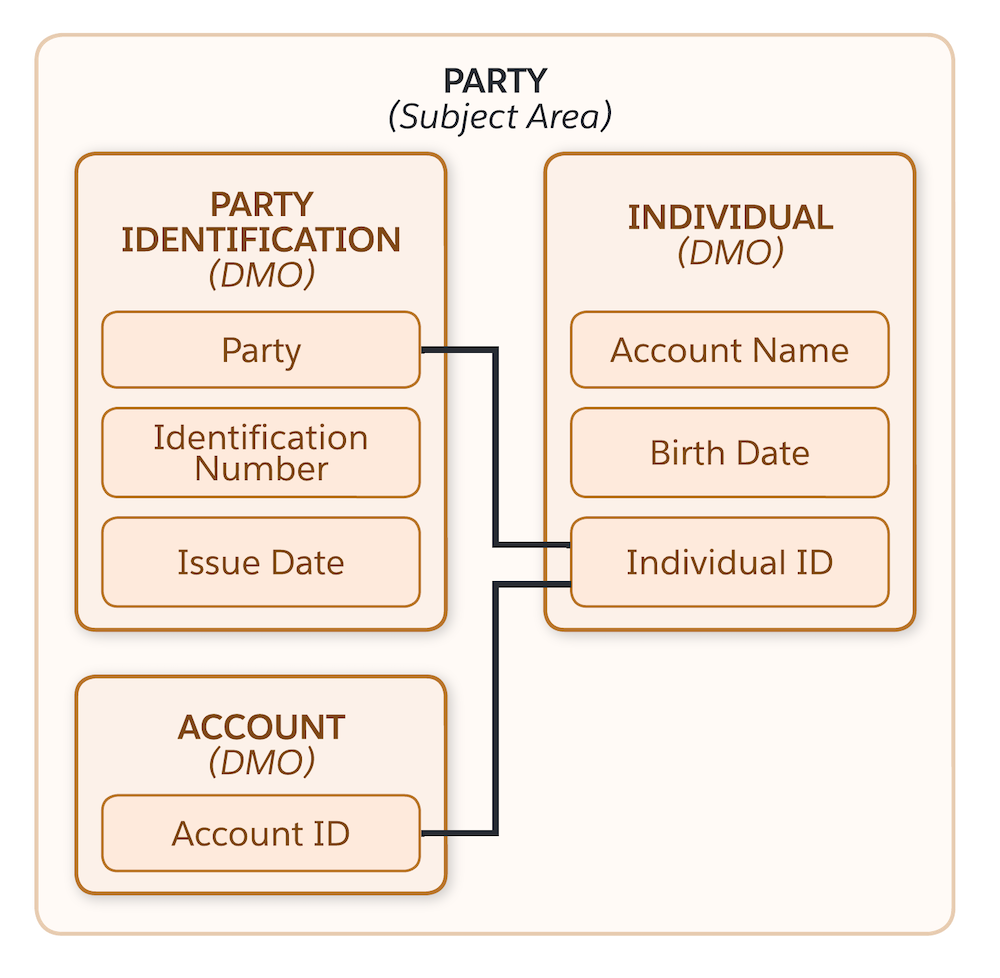
在 Customer 360 数据模型中,Party 不是政治或派对——它代表一个人或组织的实例。这个实体可以是个人、企业或其他机构。
Party 主题领域包含以下关键 DMO:
- Party Identification——外部标识符(驾照号、会员号等)
- Individual——具体的人(姓名、生日等)
- Contact Point Email/Phone/Address——各沟通渠道的联系信息
每个 DMO 实例是实体的唯一表示,但描述该实例的数据可能来自多个数据源,存在多种变体。
客户案例——Rachel Rodriguez 的多源数据整合挑战
让我们通过一个真实的人来看 Party 主题领域:NTO 客户 Rachel Rodriguez。
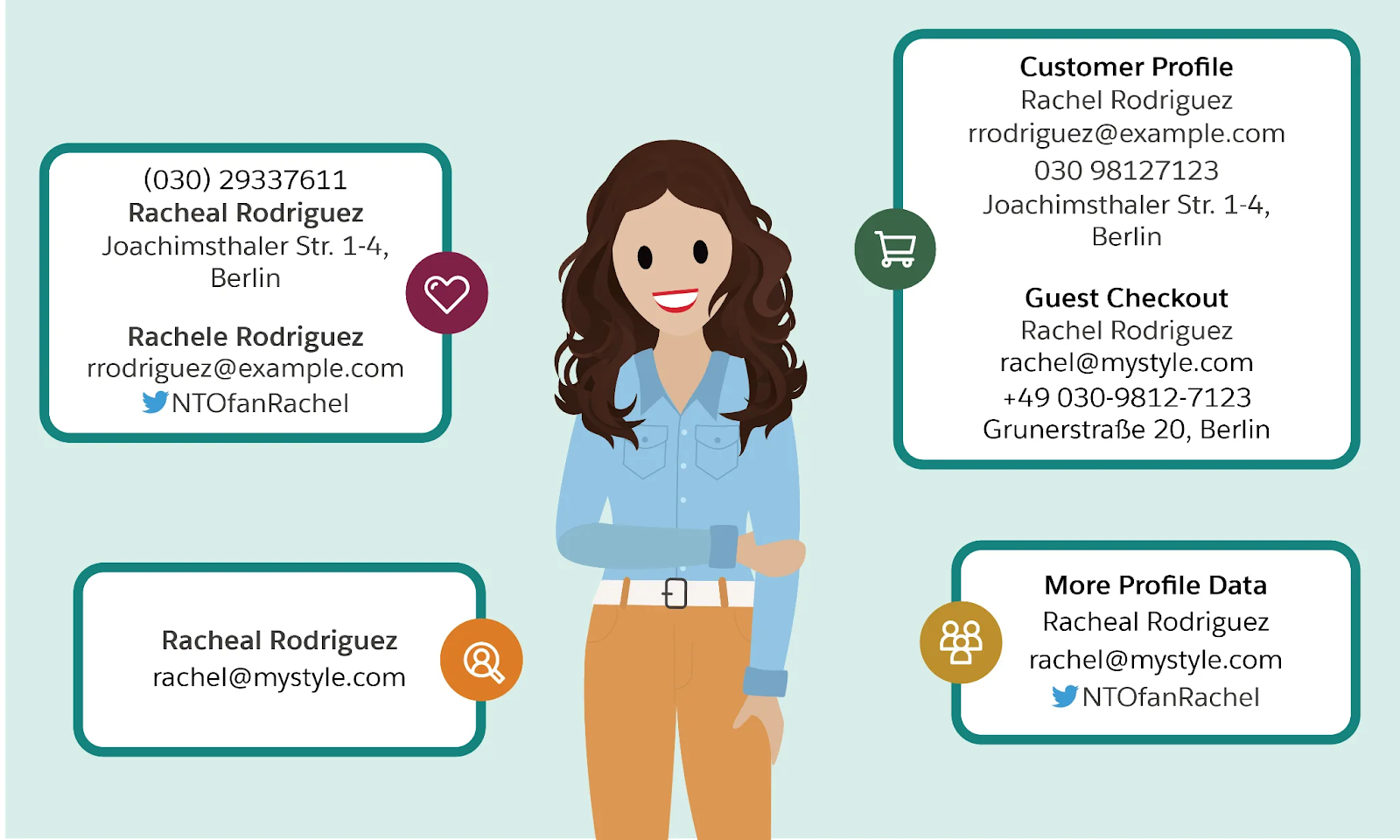
Rachel 的信息来自多个数据源,且存在大量变体:
- 姓名拼写差异——Rachel、Racheal、Rachele⋯⋯ 更别提像 Elizabeth/Beth/Betsy/Liz/Liza/Eli 这样的传统名变体
- 不同地址——旧公寓、工作地址、当前居住地
- 多个电话号码和邮箱——个人、工作、旧号码
所有这些信息必须通过正确的 DMO 和属性链接回单一的统一身份。这就是标准化数据模型发挥威力之处。
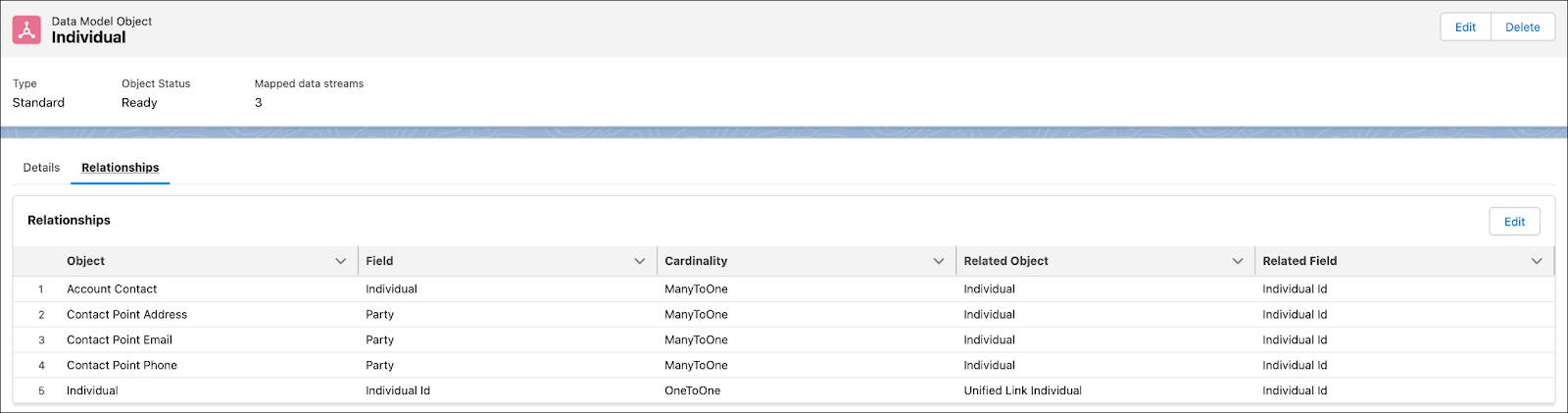
Party 中的 Individual DMO——Individual ID 的核心链接作用
Rachel 的信息从各种来源流入。Pia 必须确保每个数据流都链接到正确的 DMO 及其相应属性。
Individual ID 是最关键的链接字段:
- 位于 Individual DMO 中
- Contact Point Address、Email、Phone 均以 Many-to-One(多对一)基数与之关联——一个 Individual 可以有多个地址、邮箱、电话
- 经过身份解析(Identity Resolution)后,与 Unified Link Individual 以 One-to-One(一对一)关联——保持记录的唯一性
这个链接结构是创建 Rachel 统一画像的基础。Pia 必须确保每个数据流都能正确映射回相应的 Individual ID。
个性化你的数据模型——标准化与定制的平衡
你的数据模型是个性化于你的 Data 360 实例的——构建什么取决于你的数据需求和数据源。
但标准化的 DMO 是这一切能运作的原因:
- Data 360 可以将所有信息匹配到正确的统一个人
- 开箱即用的最大化功能
- 更快的价值实现时间
- 与 AgentExchange 应用的兼容——所有人都认同相同的数据类型和配置
关键规划决策:
- 在所有数据源之间正确映射标识符
- 决定哪些数据源优先级更高(全名 vs 昵称、首选邮箱地址)
- 这直接影响到身份解析规则——决定了在客户交互中使用哪些信息以及如何排定优先级
Unit 02 小结——Party 主题领域关键要点
在本单元中,你探索了 Data 360 中个人的数据模型:
- Party 主题领域代表个人和组织
- Individual ID 是链接所有 Party DMO 的关键字段
- Contact Points(Email, Phone, Address)以 Many-to-One 连接
- 身份解析创建 Unified Link Individual(One-to-One),保持唯一性
- 标准化使 AgentExchange 兼容成为可能
接下来,我们将视角从"客户是谁"转向"客户做了什么"——Engagement 主题领域。
三、探索 Engagement 主题领域——客户的行为数据
Engagement DMOs 描述了客户的行动和互动,从邮件点击到网站浏览。将 Engagement 连接到 Party,就能获得完整的 360° 客户视图。
学习目标
完成本单元后,你将能够:
- 描述 Engagement 主题领域及其目的
- 识别 Engagement 数据如何在 Data 360 中用于细分和个性化
Engagement 核心三要素——谁、为什么、如何参与
在 Data 360 中,Engagement(互动)数据描述人们采取的行动。每个互动至少应包含三个信息点:
- 谁参与了互动(Who)
- 为什么发生互动(Why)
- 如何发生互动(How)
这就像线索游戏——"Rachel Rodriguez 通过一封邮件作为某营销活动的一部分参与了互动。"Engagement 主题领域帮助 Data 360 回答营销的终极问题:我的客户是谁?他们做了什么?
Engagement 主题领域中的 13 种 DMO
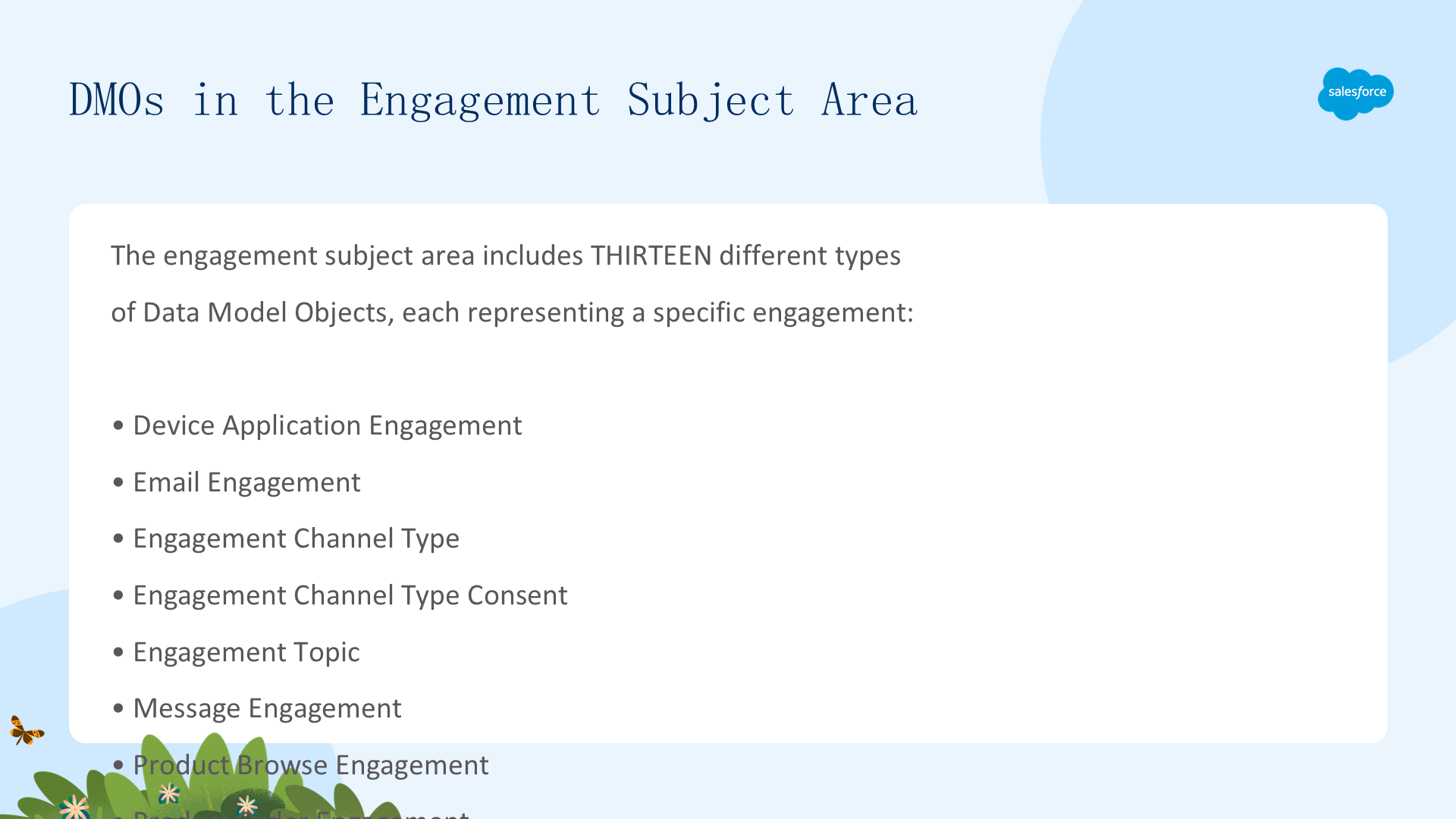
Engagement 主题领域包含13 种不同类型的数据模型对象,每种代表特定的互动类型:
- Device Application Engagement(设备应用互动)
- Email Engagement(邮件互动)
- Engagement Channel Type(互动渠道类型)
- Engagement Channel Type Consent(渠道授权)
- Engagement Topic(互动主题)
- Message Engagement(消息互动)
- Product Browse Engagement(产品浏览互动)
- Product Order Engagement(产品订单互动)
- Sales Order Product Engagement(销售订单产品互动)
- Shopping Cart Engagement(购物车互动)
- Shopping Cart Product Engagement(购物车产品互动)
- Web Search Engagement(网页搜索互动)
- Website Engagement(网站互动)
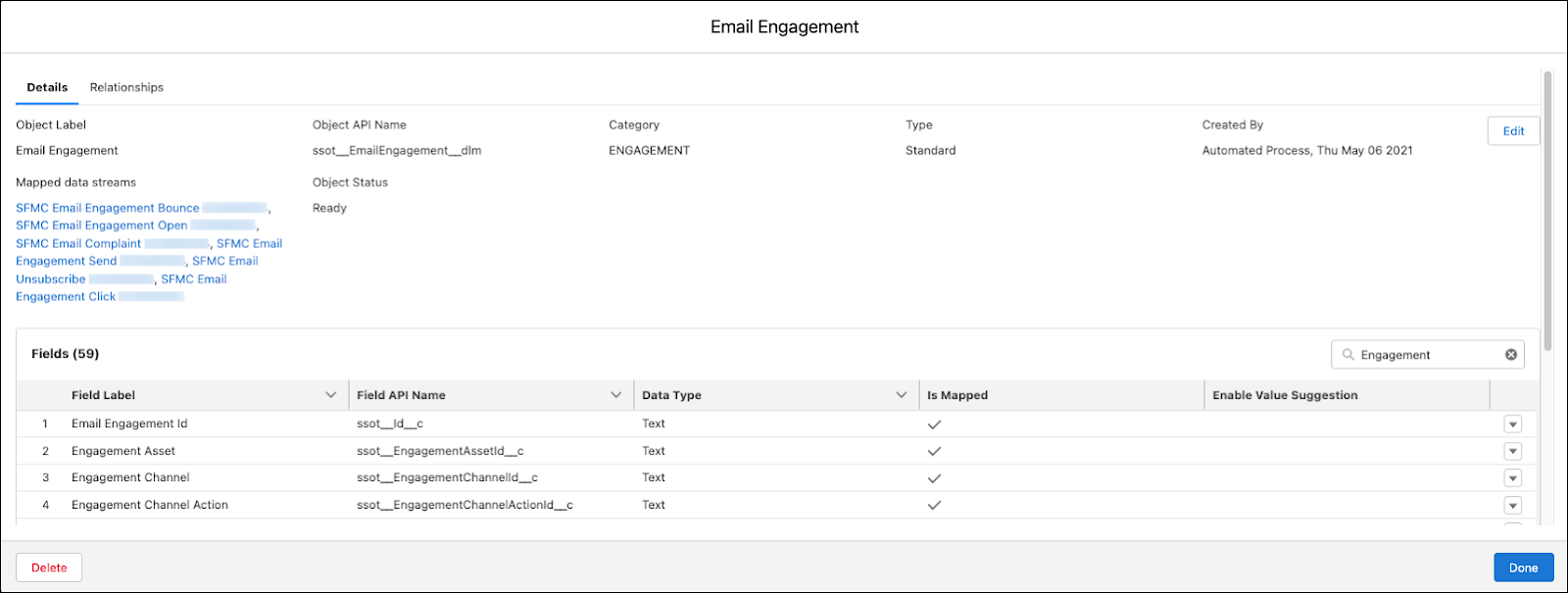
单个 DMO 如 Email Engagement 可以包含超过 50 个属性——关联到具体的人、邮件名称、发生时间和地点等诸多维度。这让 Pia 可以按"点击了特定链接"或"长时间未收到邮件"来细分 NTO 客户。
Data Platform 预置数据包——自动映射加速实施
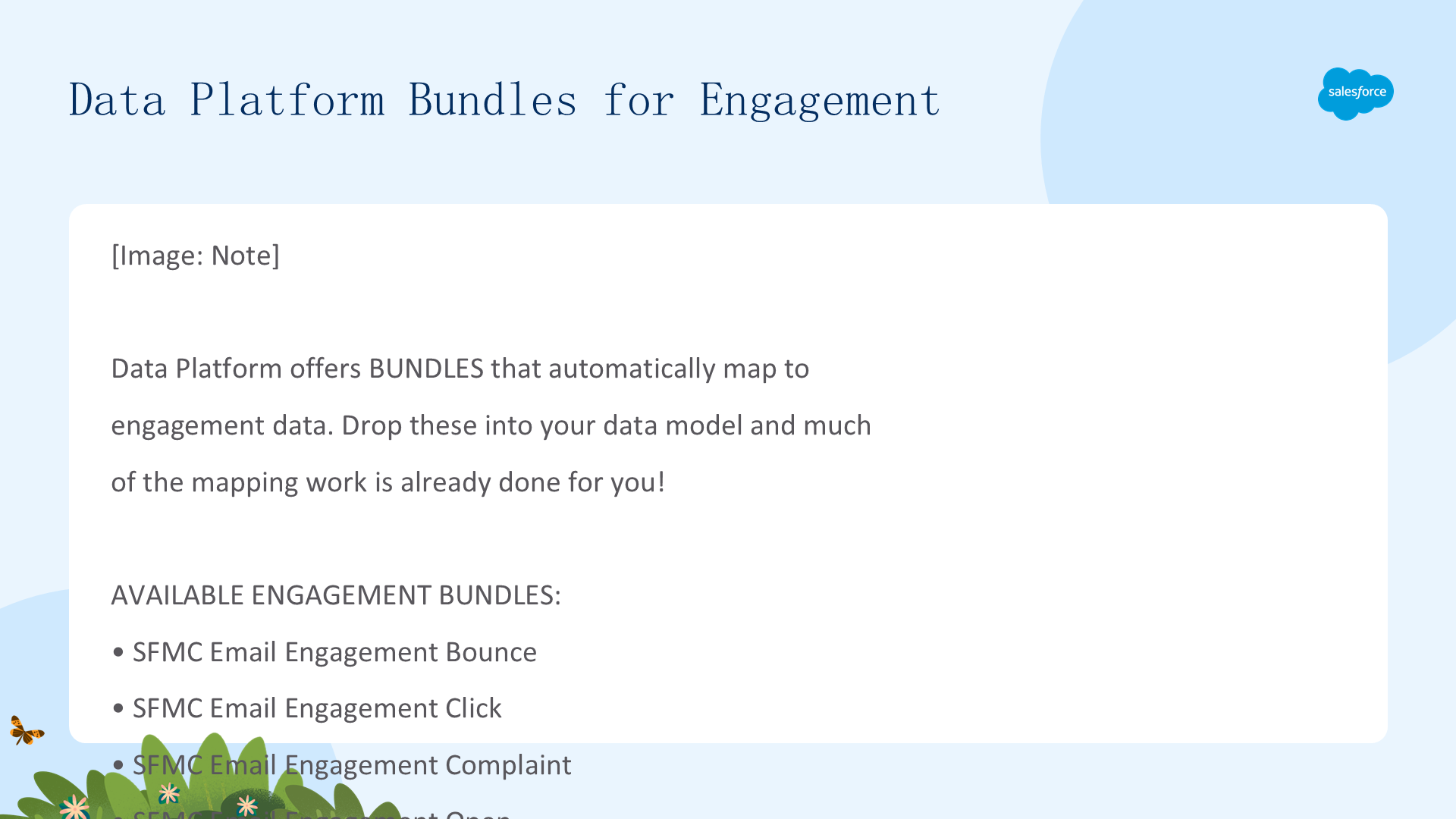
Data Platform 提供预置数据包(Bundles),可自动映射到 Engagement 数据。将这些包放入数据模型,大量映射工作就已完成:
- SFMC Email Engagement Bounce(退信)
- SFMC Email Engagement Click(点击)
- SFMC Email Engagement Complaint(投诉)
- SFMC Email Engagement Open(打开)
- SFMC Email Engagement Send(发送)
- SFMC Email Engagement Unsubscribe(退订)
这些预置包大幅加速 Marketing Cloud Engagement 数据与 Data 360 数据模型的连接。
将 Engagement 连接到 Party——Individual ID 的关键纽带
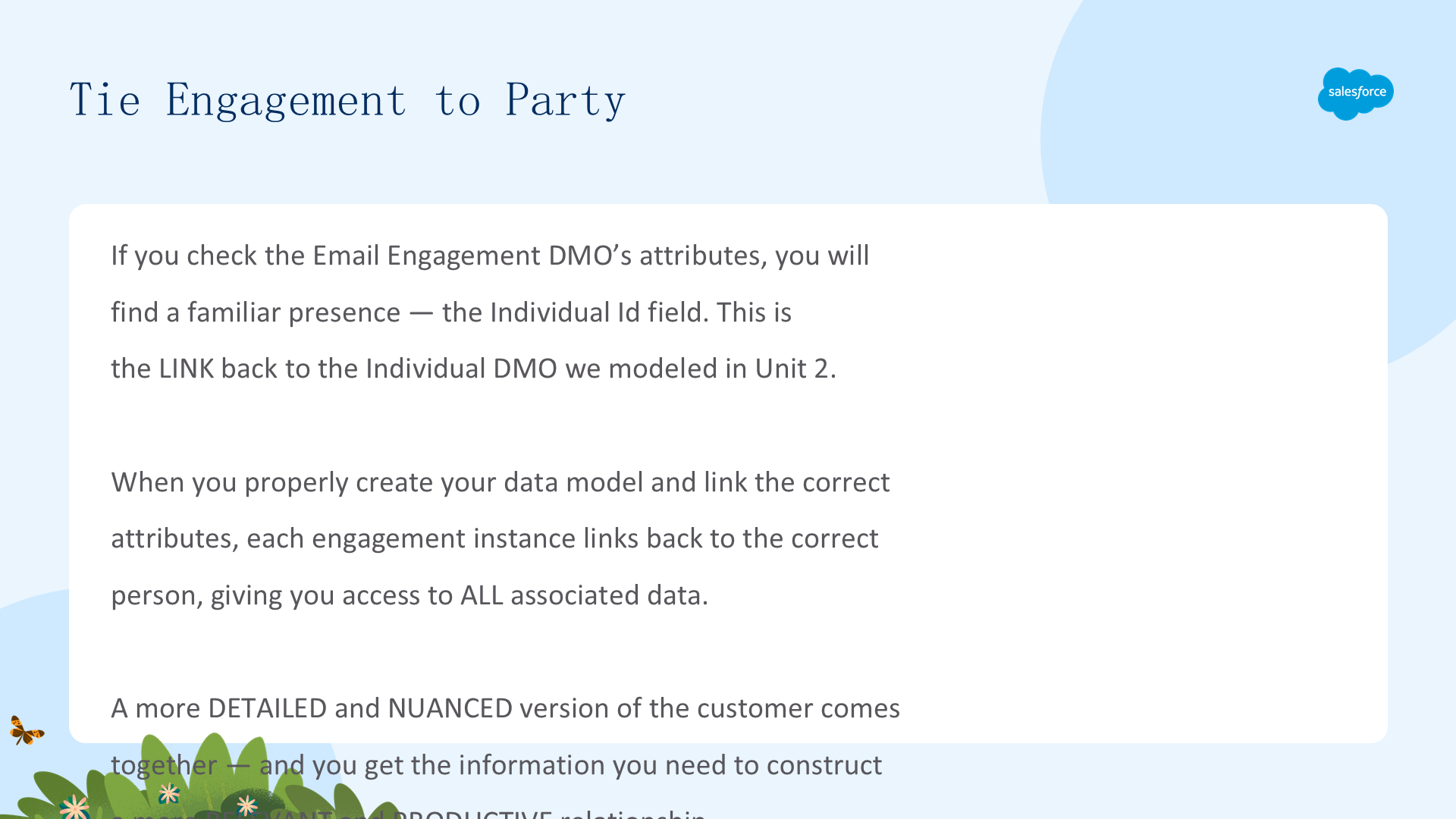
查看 Email Engagement DMO 的属性,你会发现一个熟悉的身影——Individual ID 字段。这就是链接回 Individual DMO 的纽带。
当你正确创建数据模型并链接正确的属性后:
- 每个互动实例链接回正确的人,你获得所有关联数据的访问权
- 一个更详细、更细腻的客户画像逐渐成形
- 你可以构建更相关、更有效的客户关系
记住:将人和行动放在数据模型的中心,一切围绕它们展开。
四、映射数据源到 Data 360——从规划到实施
在 Unit 04,我们走进 Data 360 实际操作:跟随最佳实践开始构建数据模型、将数据源映射到 DMO、并为未来增长做好规划。
学习目标
完成本单元后,你将能够:
- 使用 Customer 360 数据模型的 DMO 来建模你的数据
- 识别数据模型中的重要组成部分,并在此基础上系统地扩展
开始构建数据模型——Pia 的核心最佳实践
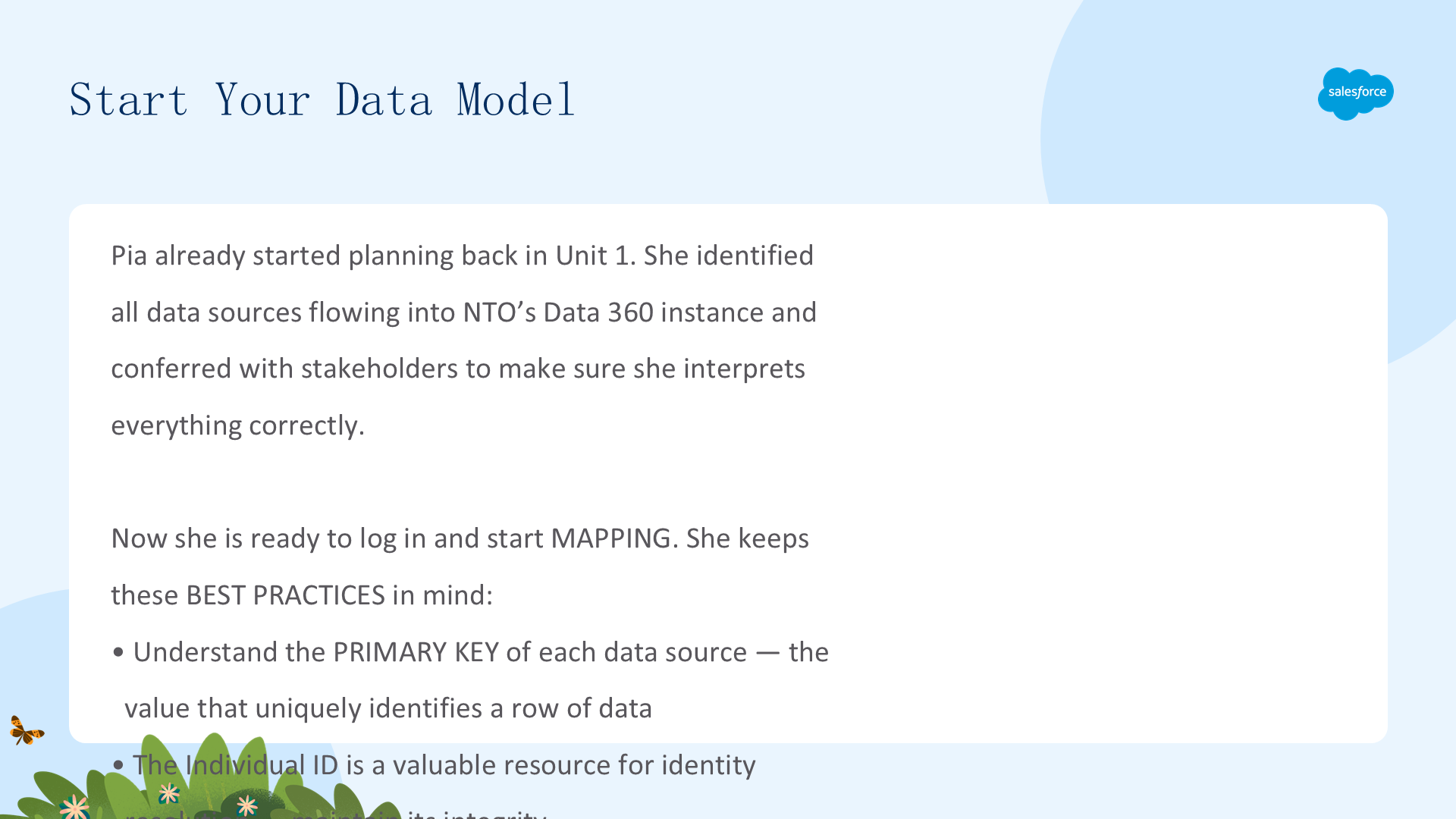
Pia 从 Unit 1 就开始规划——她识别了所有流入 NTO Data 360 的数据源,并与利益相关者充分沟通。现在她准备好了。以下是她的最佳实践清单:
- 理解主键——每个数据源中唯一标识一行数据的值
- 维护 Individual ID 的完整性——它是身份解析的核心资源
- 识别外键——如销售订单中的 Product ID 链接到完整的产品详情表
- 确定数据是否不可变——一旦发送就不再改变?还是需要定期刷新?
更多映射最佳实践——数据质量、优先级与认证
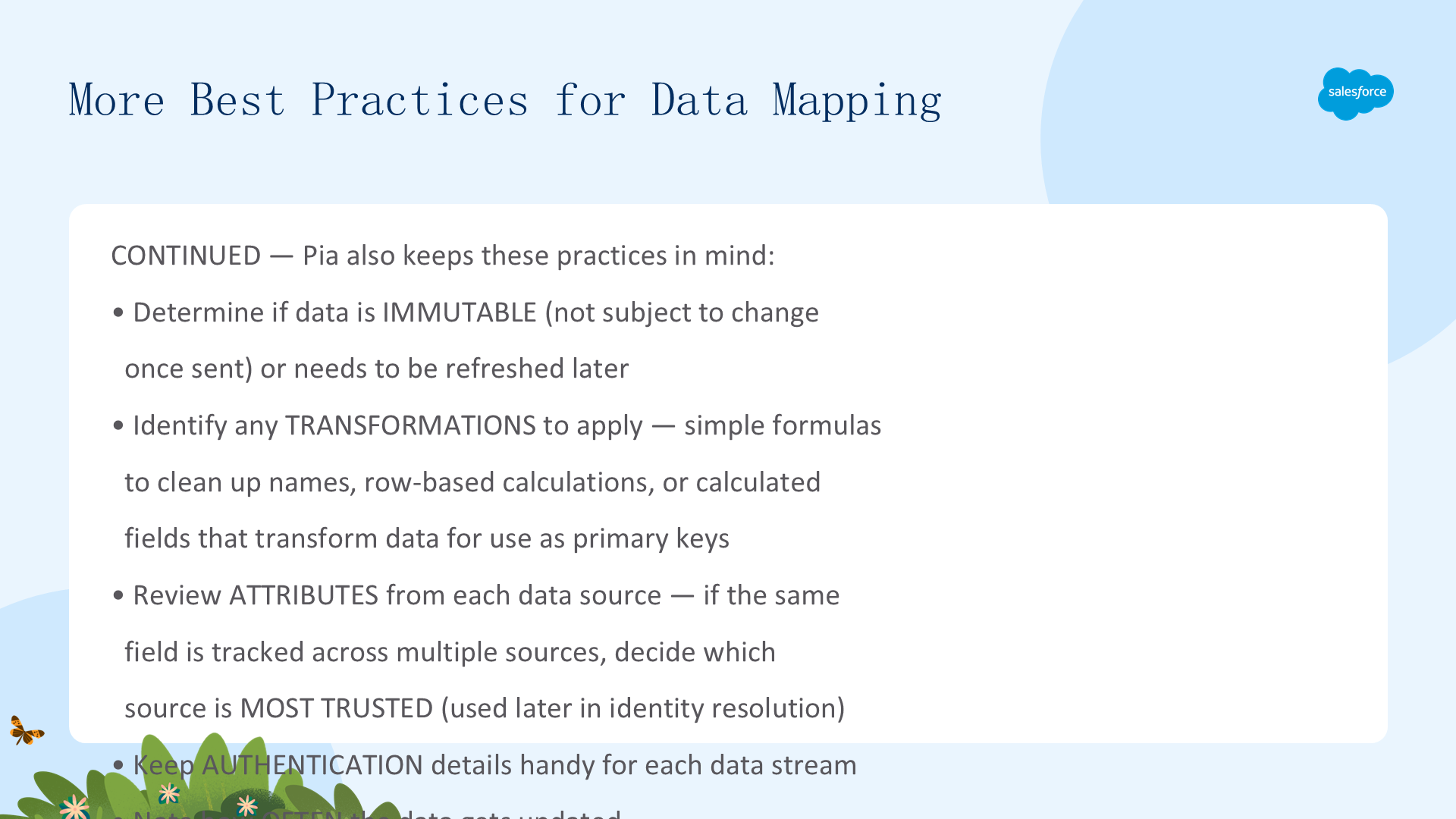
继续 Pia 的实践清单:
- 识别数据转换需求——清理姓名的简单公式、行级计算、或为用作主键而创建的计算字段
- 审查属性/字段——如果同一字段来自多个数据源,决定哪个来源最可信(用于后续身份解析优先级)
- 备好认证信息——确保能连接每个数据流
- 记录数据更新频率
这些决策直接塑造统一画像的清洁度和可靠性。
实操——Pia 将数据流映射到 Website Engagement DMO
规划完成后,Pia 登录 Data 360 开始实际操作。她将一个 NTO 数据流映射到 Website Engagement DMO:
- 在 Data 360 中,点击 Data Streams 选项卡
- 点击要映射的数据流
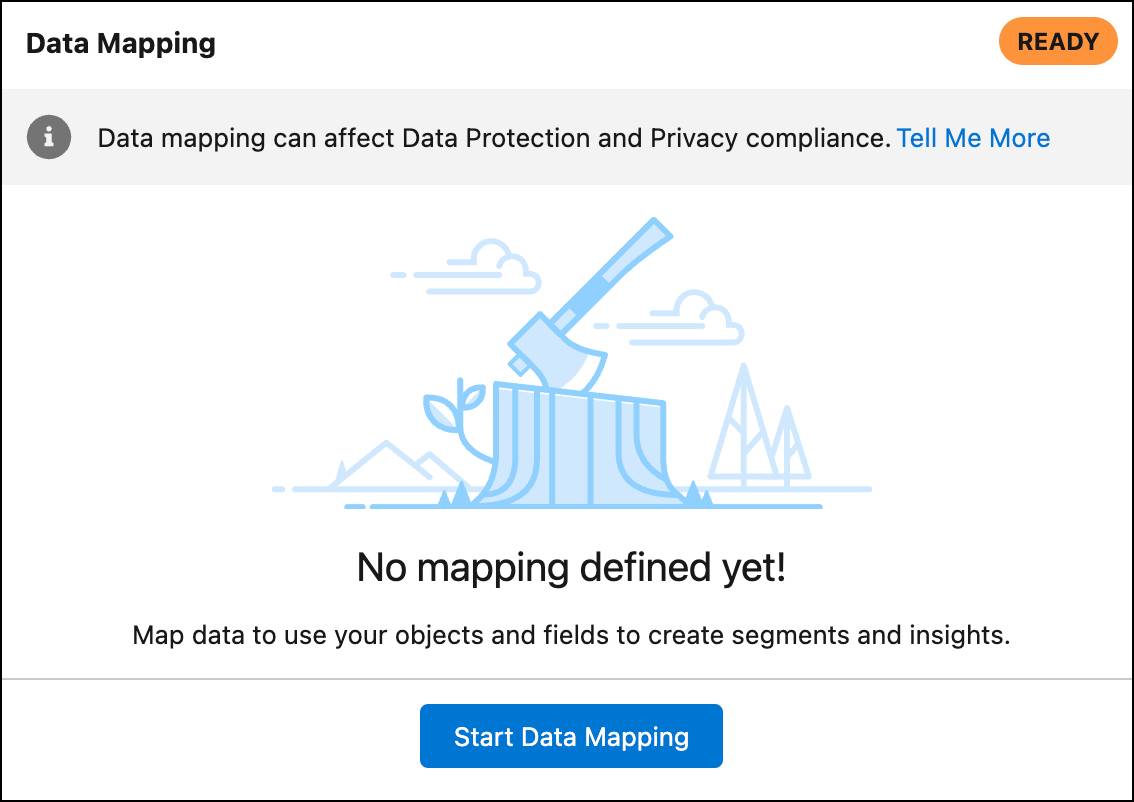
- 点击 Start Data Mapping 查看可用字段
- 点击 Select Objects,然后点击 Individual 旁边的 + 图标
- 点击 Done 返回映射界面
完成映射——数据流连接 Individual DMO
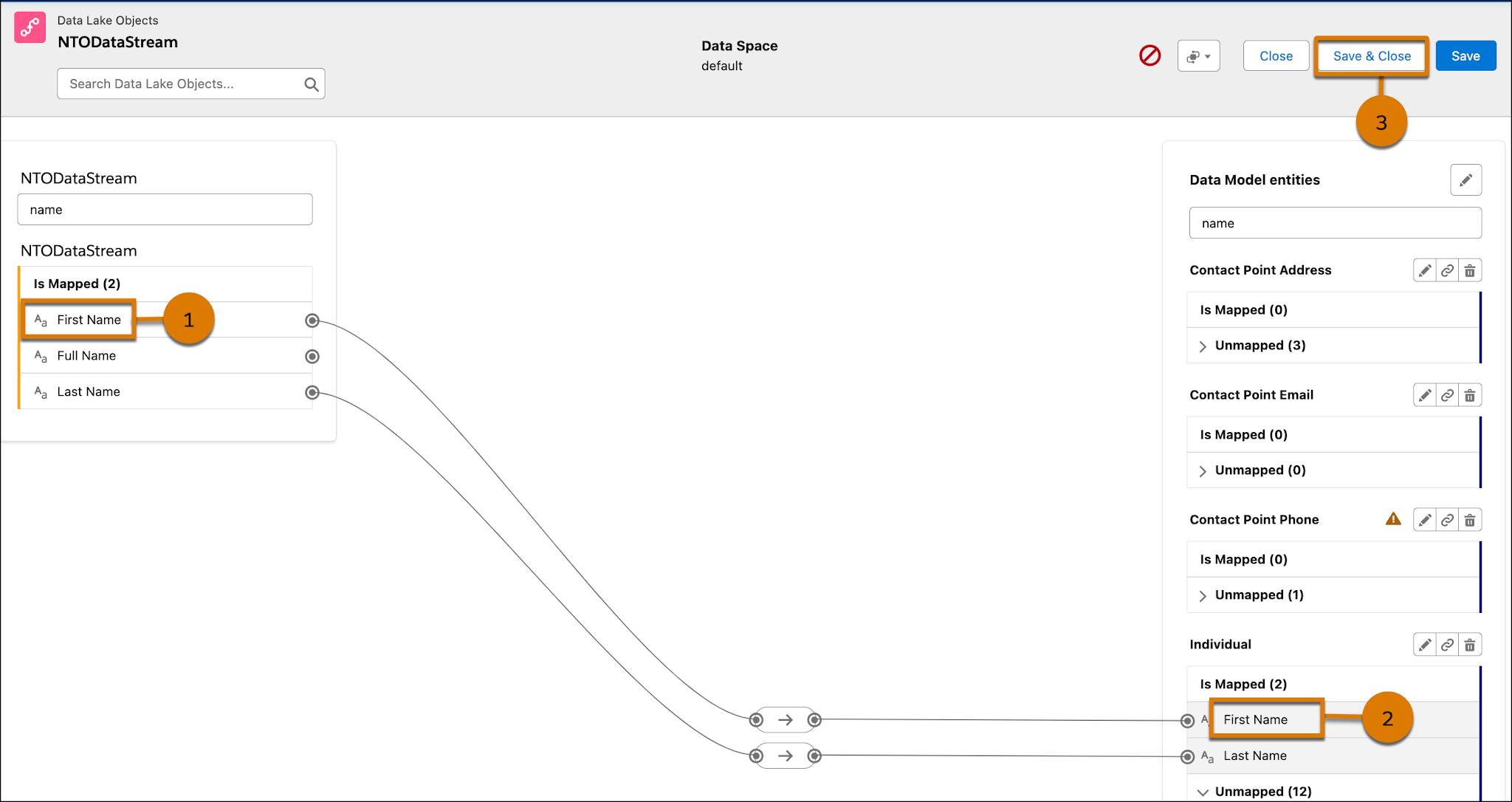
Pia 继续完成字段匹配:
- 在数据流区域点击 First Name,在 DMO 区域点击 First Name。对 Last Name 重复此操作
- 完成其他必要映射后,点击 Save & Close
数据流现已映射到 Individual DMO 和 Individual ID——身份解析的必要映射。这让 Pia 可以将 Rachel 的网站互动链接起来用于细分和身份解析。
Pia 还配置了身份解析流程,以填充 Unified Individual 和 Unified Link Individual DMO——帮助系统追踪所有分散的数据源,建立正确的连接。
规划未来——数据模型的持续维护与演变
构建数据模型需要时间、耐心以及大量的研究和规划。大部分工作在初期完成,但模型需要持续维护。
数据模型会随着以下情况而演变:
- 添加新的数据流
- 移除过时的数据源
- 扩展到新的使用场景
定期审查数据模型和数据源,确保它们持续提供最佳结果。你可能不需要修改现有映射,但需要为新增数据留出空间。数据模型应当是随业务需求演变的活跃结构,而非限制未来可能性的固定蓝图。
最终目标——构建每位客户的完整统一画像
简单来说:为账户中的每位客户构建一个完整的、统一的视图。
稍详细的答案:你的数据模型和映射策略应当让所有必要信息都可用于创建该客户的统一画像。
这一过程通过运行身份解析规则(Identity Resolution Rules)完成——这些规则将获取所有分散信息,构建 Unified Link Individual DMO——这个 DMO 在身份解析流程执行前不存在于账户中。
这正是正确配置数据模型如此重要的原因:当你花时间去理解你的数据、做出正确的映射、并将数据模型设置为高效和清晰时,你得到的是最干净、最精确的客户统一画像。